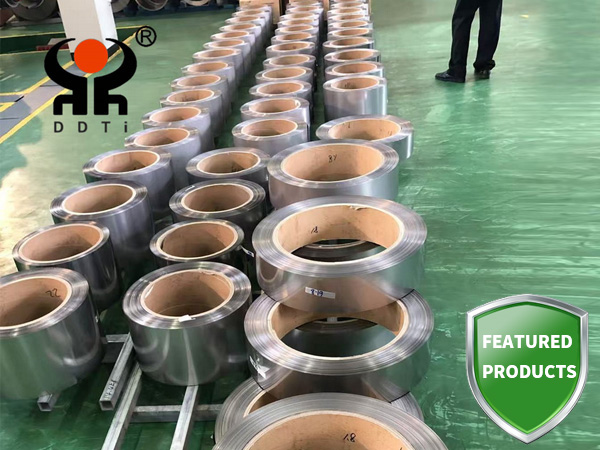
Titanium foil
Designation
Standard
OverviewMedical titanium strips, as the core raw material for orthopedic bone plates, maxillofacial repair plates, cardiovascula
Hotline:
+86-917-3412107 +86-18091715917
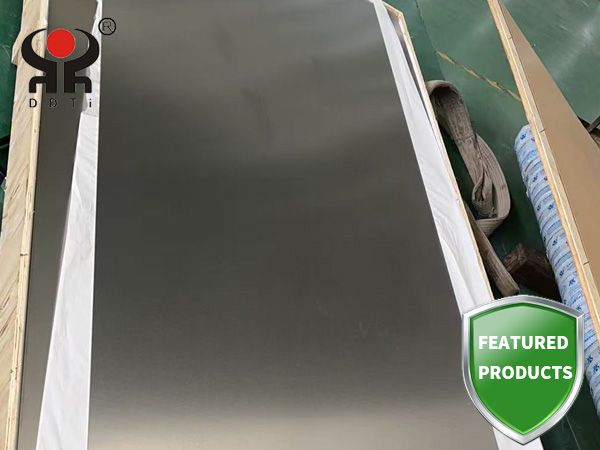
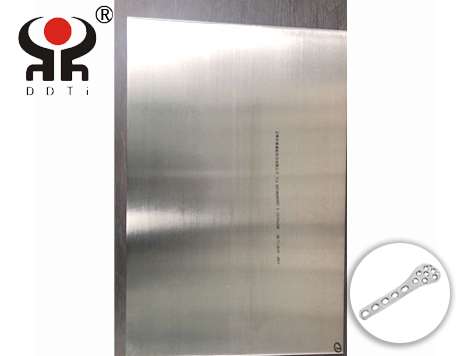
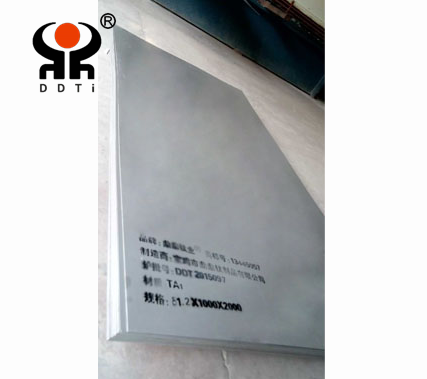
Medical Titanium Strip | Core Technical Requirements - Meet the standards for mass production of medical devices and establish a solid foundation for clinical safety of implants/accessories Medical titanium strips, as the core raw material for orthopedic bone plates, maxillofacial repair plates, cardiovascular stent substrates, and medical device accessories, need to balance the three core characteristics of precision molding, biocompatibility, and corrosion resistance and stability. Their quality directly determines the clinical safety and processing adaptability of end devices. Baoji Dingding Titanium Products Co., Ltd. is based on the advantages of the entire industry chain of "China Titanium Valley", closely following the core procurement demands of medical device manufacturers. In response to the characteristics of "ultra-thin precision, high ductility, and batch stability" of medical titanium strips, it has clarified the key technical requirements for TA2/TC4 medical titanium strips, making procurement decisions more accurate, production more efficient, and products more compliant. 1. Compliance requirements: Medical grade safety measures to eliminate registration barriers Medical titanium strips are widely used in implantable and non implantable medical devices. Biosafety and standard compliance are the "first line of defense" for medical device manufacturers in procurement, directly determining whether the product can enter clinical applications. 1. Full coverage of authoritative standards: Strictly follow GB/T 13810-2017 "Titanium and Titanium Alloy Processing Materials for Surgical Implants", ISO 5832-2/3 "Metallic Materials for Surgical Implants", and ASTM F67 (Pure Titanium)/F136 (TC4) international standards. Implant grade titanium strips meet NMPA, FDA, and CE registration and application requirements, while non implant grade titanium strips comply with medical device accessory production standards to avoid delays in the market cycle due to non-compliance with material standards. 2. Medical grade biosafety guarantee: TA2 pure titanium purity ≥ 99.6%, TC4 titanium alloy uses ≥ 99.7% high-purity sponge titanium as raw material, implements medical grade impurity control process - interstitial element oxygen ≤ 0.12% (TA2)/0.13% (TC4), nitrogen ≤ 0.01%, hydrogen ≤ 0.001%, to eliminate tissue inflammation and allergic reactions caused by impurity precipitation from the root; Implant grade titanium strips have passed ISO 10993 series biocompatibility testing (cytotoxicity, sensitization, local reactions after implantation), and third-party authoritative institutions have issued qualified reports to meet long-term implantation needs. 3. Full process traceability: Each batch of products is accompanied by a complete file of "raw material testing report+rolling process parameters+heat treatment records+finished product testing report", establishing a full chain traceability system from raw material batch to rolling batch number to finished coil number, fully meeting the quality system audit and full life cycle supervision requirements of medical device manufacturers. 2. Mechanical adaptability requirements: Match multiple scenario requirements to ensure device performance Medical titanium strips need to adapt to the functional requirements of different terminal devices - orthopedic bone plates require high strength, maxillofacial repair plates require high ductility, cardiovascular stent substrates require a balance between elasticity and toughness, and titanium strip performance needs to be accurately matched with scene characteristics.
Additional guarantee: Strength and hardness fluctuations within the full width range are ≤ 3%, grain size reaches ASTM grade 5 or above (TA2)/grade 6 or above (TC4), there are no issues of component segregation or uneven thickness, ensuring consistent performance of all parts of the titanium strip after stamping and bending, and avoiding the risk of local failure of end devices. 3. Processing adaptability requirements: Meet precision molding and improve production efficiency Medical titanium strips often require complex processes such as stamping, etching, laser cutting, and welding to form. Ultra thin specifications (0.05-0.5mm) are difficult to process, and the dimensional accuracy and surface quality of titanium strips directly determine production losses and yield. 1. Micron level dimensional accuracy -Thickness tolerance: The tolerance of ultra-thin titanium strip (0.05-0.5mm) is controlled within ± 0.008mm, the tolerance of conventional titanium strip (0.5-2.0mm) is ± 0.01mm, the width tolerance is ± 0.1mm, and the straightness error is ≤ 0.02mm/m; -Adaptation process: Perfectly matched with precision processes such as orthopedic bone plate stamping, cardiovascular stent etching and hollowing, and maxillofacial repair plate bending and shaping, without the need for additional leveling and polishing, reducing material waste and improving mass production efficiency; -Customized support: The width (10-500mm) and thickness (0.05-3.0mm) can be customized according to customer needs to meet the production needs of different medical devices. 2. Mirror level surface quality -The surface is free of scratches, oxide scales, pinholes, and other defects. After polishing, the surface roughness Ra is ≤ 0.4 μ m, meeting the medical hygiene standard; -A dense oxide film is formed on the surface of the implanted titanium strip, with a corrosion rate of ≤ 0.0005mm/year in a simulated body fluid environment. This not only reduces tool wear but also avoids tissue irritation caused by surface defects after implantation. 3. Multi process adaptability -TA2 pure titanium has excellent welding performance and can be welded with dissimilar materials such as medical stainless steel and cobalt chromium alloy, making it suitable for the production of composite instruments; -The etching accuracy of TC4 alloy can reach ± 0.01mm, meeting the processing requirements of micro porous and hollow structures of cardiovascular stents. After etching, there are no edge burrs or deformation phenomena. Fourth, quality stability requirements: batch consistency, long-term reliability Medical device manufacturers have extremely high requirements for batch consistency of titanium strips, especially for implant grade products. Quality fluctuations directly affect clinical safety and brand reputation. 1. Strict control of batch consistency: The fluctuation of composition, thickness, and surface quality of titanium strips in the same batch is ≤ 2%, and the difference between different batches is ≤ 4%, ensuring that medical device manufacturers do not need to frequently adjust stamping and etching process parameters, and guaranteeing the continuous and stable operation of the production line. 2. Long term performance stability: TA2 pure titanium undergoes vacuum annealing treatment at 300-400 ℃, while TC4 alloy undergoes "solid solution+aging" heat treatment (950 ℃/1h solid solution water quenching+600 ℃/2h aging air cooling), resulting in stable structure and long-term service performance in human body fluids or medical environments without degradation, deformation, or corrosion risks. 3. Zero release for full testing: Each batch of products undergoes spectral composition analysis, thickness accuracy testing, surface roughness testing, tensile testing, and additional ultrasonic non-destructive testing (internal defects ≤ Φ 0.3mm equivalent flat bottom holes) and biocompatibility retesting for implanted grade titanium strips. Non conforming products are zero in the market. Baoji Dingding Titanium: Preferred Partner for Medical Titanium Strip Procurement Based on the industrial foundation of "China Titanium Valley", we provide one-stop services for medical device manufacturers with "medical grade quality+complete qualifications+customized technology+fast delivery" as the core: -Physical production capacity: Our own 8000 square meter production base has an annual production capacity of 15 tons of medical titanium strips. Standardized products can be delivered within 8 days, and customized specifications (ultra-thin, ultra wide) can be responded to within 30 days to ensure supply chain stability; -Complete qualifications: certified by ISO 13485 medical quality management system, equipped with implant level/non implant level testing reports, to assist customers in quickly completing medical device product registration; -Technical support: Our 24-hour technical team is online, providing suggestions for optimizing titanium strip stamping, etching, and welding processes to solve pain points in medical device production. Field visit: No. 68 Gaoya Industrial Park, Gaoxin Avenue, High tech Zone, Baoji City, Shaanxi Province (Welcome to visit the factory at any time to verify the exclusive production line and quality control system of medical titanium strips) Choose Baoji Dingding Titanium Medical Titanium Strip, which allows you to purchase without compliance concerns, produce without process difficulties, and have no clinical risks, building a safety barrier in the field of medical devices together! |