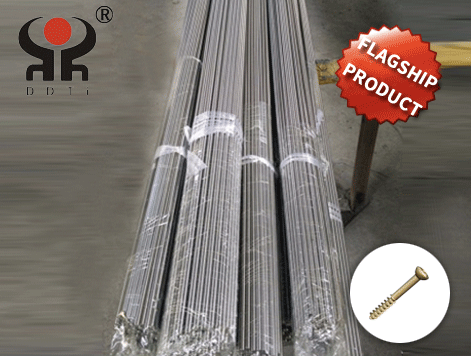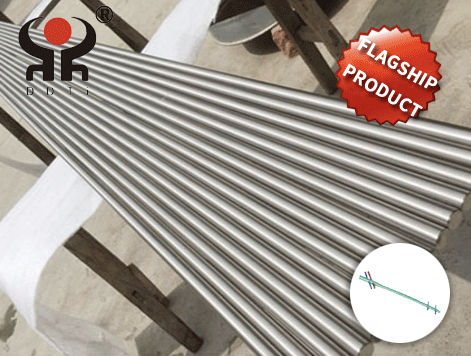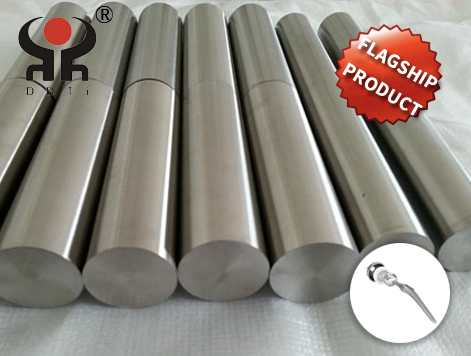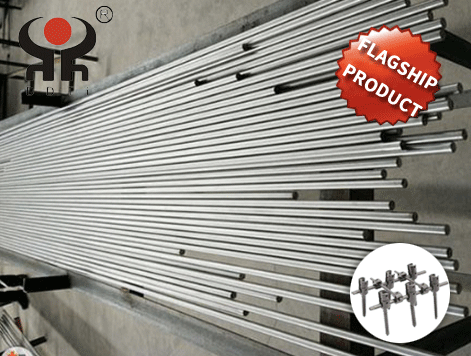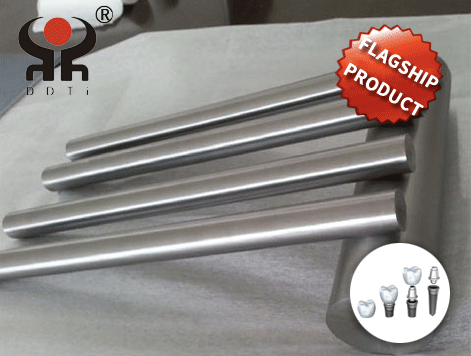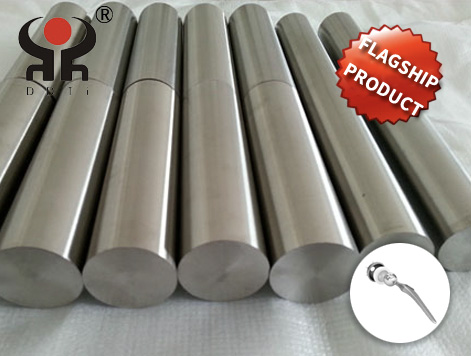
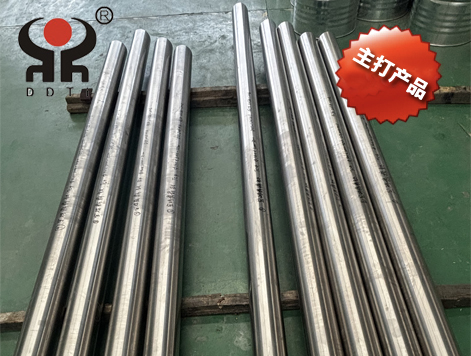
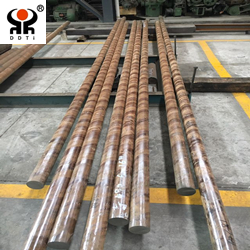
Titanium rod
Designation
Standard
OverviewSpecially designed for extreme working conditions, this product uses titanium rods for petroleum instruments, which can
Hotline:
+86-917-3412107 +86-18091715917
Titanium Alloy Rod for Petroleum Instruments | Core Technical Requirements - Resistant to high temperature of 175 ℃ and high pressure of 140MPa, safeguarding the safety of core components of petroleum instruments As the "eyes" of oil and gas exploration, petroleum logging instruments require stable operation in high-temperature, high-pressure, and highly corrosive environments in deep wells above 5000 meters, including their shell, inclinometer protection cylinder, non-magnetic drill rod, and flexible shaft. Especially in the exploration of magnetic interference formations, non-magnetic drill rods are the key to ensuring the accuracy of logging data. Baoji Dingding Titanium Products Co., Ltd. is based on the advantages of the entire industry chain of "China Titanium Valley". In response to the core requirements of "impact resistance, corrosion resistance, and precision assurance" for logging instrument components and "no magnetic interference, long dimensional stability" for non-magnetic drill rods, we have created TC4/TC11/TC18 special titanium alloy rods. With a compressive strength of 140MPa, high temperature resistance at 175 ℃, and deep hole process advantages, we provide reliable substrate guarantees for logging instrument components and 9-meter long titanium alloy non-magnetic drill rods, making procurement decisions more accurate, production more efficient, and operations more reassuring. 1. Compliance Requirements: Industry standards provide a bottom line and are suitable for harsh logging scenarios Logging instruments directly determine the accuracy of oil and gas exploration data, and the compliance and traceability of component substrates are the primary prerequisites for petroleum equipment manufacturers to purchase, directly related to the safety of exploration operations and data reliability. 1. Full coverage of authoritative standards: Strictly following GB/T 2965-2023 "Titanium and Titanium Alloy Rod", ASTM B348 "Titanium and Titanium Alloy Rod and Forging", and API Spec 7K "Specification for Drilling and Well Repair Equipment", TC18 material additionally meets the requirements of ASTM B863 standard, and the product performance is fully compatible with the production of logging instrument housings, protective barrels, drill rod flexible shafts, and 9-meter long non-magnetic drill rods, meeting the admission standards of large oil and gas enterprises such as PetroChina, CNOOC, and Sinopec. It can be directly used for NACE MR0175 sulfur resistance certification application of logging equipment. 1. Raw material and production compliance: High purity sponge titanium with a purity of ≥ 99.7% is used as the raw material, combined with high-purity aluminum, vanadium, and tin alloy elements. It is melted through a dual vacuum arc remelting (VAR) process, with a vacuum degree of 2.0 × 10 ⁻ Pa, to prevent the introduction of harmful impurities such as sulfur and phosphorus, and to avoid the risks of "hydrogen embrittlement" and "stress corrosion" at the root; The production process strictly follows the ISO 9001 quality management system, and each process has digital records to meet the strict quality control requirements of the petroleum industry for equipment components. 2. Full chain traceability: Establish a full process traceability system of "raw material batch → melting furnace number → forging and rolling parameters → finished product testing". Each titanium alloy rod is equipped with an exclusive traceability code, which can synchronously query "raw material spectrum report+heat treatment curve+finished product performance report". Petroleum instrument equipment manufacturers do not need to invest additional traceability costs, easily meeting the monitoring needs of the entire life cycle of logging instruments. 2. Core Performance Advantage: Accurately matching component requirements and building a strong protective barrier In response to the differentiated requirements of "impact resistance" for the casing of logging instruments, "precision protection" for inclinometers, and "fatigue resistance" for drill pipe flexible shafts, titanium alloy rods are designed with 140MPa compression resistance and 175 ℃ high temperature resistance as the core to achieve precise adaptation of performance and component functions. 1. Extreme environmental hardcore tolerance: 140MPa compressive strength+175 ℃ high temperature resistance -High pressure compression resistance: Through the process of "multi-directional forging and rolling+strengthening heat treatment", the compressive strength of titanium alloy rods is stable at 175 ℃, with a compressive strength of ≥ 140MPa, far exceeding the upper limit of 100MPa for conventional titanium materials. The casing of petroleum instruments is made of this material, which can withstand a formation pressure of 120MPa in a deep well of 5000 meters, avoiding deformation of the casing and squeezing of internal precision sensors; The inclinometer protection cylinder can resist the impact of drilling tool collisions, ensuring accurate inclinometer data. -High temperature stability: In a continuous working environment of 175 ℃ (simulating deep well formation temperature), the mechanical performance attenuation is ≤ 3%, the hardness (HV) fluctuation is ≤ 5%, and there is no oxidation or embrittlement phenomenon - the drill rod deflection axis can still maintain excellent elasticity at high temperatures, achieving flexible adjustment of logging instrument posture and avoiding rigid fracture caused by high temperatures. -Strong corrosion resistance: A dense oxide film of 10-15 μ m is formed on the surface. In the production fluid of oil and gas wells containing sulfur (H ₂ S), chlorine (Cl ⁻), and carbon dioxide (CO ₂), the corrosion rate is ≤ 0.001mm/year, which is more than 5 times that of stainless steel - effectively extending the underground service life of logging instrument casings, protective barrels, and non-magnetic drill rods, reducing equipment replacement frequency and exploration costs. -Non magnetic properties and advantages of long length: TC18 material has a magnetic permeability as low as ≤ 1.005 μ ₀, making it the exclusive preferred material for titanium alloy non-magnetic drill rods. It can completely avoid the influence of magnetic interference on logging instruments and ensure the accuracy of data for magnetic logging, nuclear magnetic resonance logging, etc; Using deep hole forming technology to customize a 9-meter-long titanium alloy rod, the long single piece forming reduces the connection joints of the drill pipe, reduces the risk of drilling jamming underground, and ensures the uniformity of the overall mechanical properties of the drill pipe, suitable for one-time logging operations in large sections of the wellbore. -Special advantages of deep hole technology: In response to the production needs of 9-meter-long non-magnetic drill rods, an integrated process of "CNC deep hole drilling+inner wall precision grinding" is adopted. The straightness error of the hole wall is ≤ 0.08mm/m, and the roughness Ra of the inner wall is ≤ 0.8 μ m, avoiding the concentricity deviation problem caused by traditional segmented processing; During the deep hole machining process, online flaw detection is synchronously implemented to monitor inner wall defects in real time, ensuring that there are no cracks or inclusions inside the non-magnetic drill rod, and guaranteeing the sealing performance and structural safety under high-pressure conditions. 2. Component specific mechanical indicators (TC4/TC11/TC18 models)
III. Requirements for Processing Adaptability: Meet the precision production of components and improve the yield rate The precision dimensions of logging instrument components (such as the inner diameter tolerance of the protective cylinder ± 0.01mm) and complex structures (such as the need for drilling and tapping of the casing) directly affect the production efficiency and cost control of petroleum equipment manufacturers due to the machining adaptability of titanium alloy rods. 1. Micron level dimensional accuracy, suitable for precision machining of components The diameter tolerance is strictly controlled within ± 0.05mm, the straightness error is ≤ 0.05mm/m, and the tolerance after centerless grinding reaches level h9- there is no need for additional roundness calibration during the processing of the inclinometer protective cylinder, directly ensuring the precise fit between the inner diameter and the sensor; High dimensional consistency during drilling rod deflection axis machining to avoid rotation jamming caused by diameter deviation; Accurate positioning is achieved during drilling and tapping of the casing of the logging instrument, improving the accuracy of thread matching and preventing oil and gas leakage underground. Support customized specifications: The diameter (φ 15- φ 120mm) and length (1-9m) can be customized according to component requirements. The 9-meter long titanium alloy rod is specially designed for the production of non-magnetic drill rods. Through deep hole technology, it achieves precise molding of the long length and is suitable for different types of logging instrument casings, protective barrels, drill rod flexible shafts, and non-magnetic drill rod production, reducing material cutting waste. 2. Double excellence in surface quality and formability -Surface requirements: No defects such as cracks, folds, scratches, etc. After mechanical polishing, the surface roughness Ra is ≤ 0.4 μ m, which not only reduces tool wear but also provides a good substrate for subsequent painting and rust prevention treatment of the instrument housing; -Molding performance: elongation rate ≥ 10%, cross-sectional shrinkage rate ≥ 30%, meeting the complex process requirements of forging and shaping the casing of logging instruments, stamping and forming the protective cylinder, bending and heat treatment of the drill rod deflection axis, and deep hole processing of 9-meter-long non-magnetic drill rods. There is no cracking or corner collapse during the processing, which improves the qualification rate of finished products. Fourth, quality stability requirements: batch consistency to ensure reliable exploration When mass producing logging instrument components, the quality stability of titanium alloy rods directly determines the consistency of equipment batches, avoiding exploration accidents caused by partial component failures. 3. Strict control of batch consistency: The composition, mechanical properties, and dimensional accuracy of titanium alloy rods in the same batch fluctuate by ≤ 3%, and the difference between different batches is ≤ 5% - especially for titanium alloy rods used for 9-meter long non-magnetic drill rods, the performance fluctuation in the long direction is controlled within ≤ 4%. Petroleum equipment manufacturers do not need to frequently adjust processing parameters to ensure the stability of batch production of logging instrument casings, protective barrels, and non-magnetic drill rods, avoiding the situation of partial component adaptation and rework of some components. 4. Zero release for full inspection: Each batch of products undergoes spectral composition analysis, ultrasonic non-destructive testing (internal defects ≤ Φ 0.8mm equivalent flat bottom hole), 175 ℃ high temperature and high pressure performance testing, corrosion testing, and additional magnetic permeability testing (ensuring ≤ 1.005 μ ₀) and deep hole inner wall inspection for TC18 material and non-magnetic drill rod titanium alloy rods. Key batches undergo fatigue testing simulating underground working conditions (10 ⁷ cycles without fracture), and zero defective products enter the market. 5. Long term performance guarantee: After "950 ℃/1h solid solution water quenching+600 ℃/2h aging air cooling" heat treatment (TC18 adopts the "980 ℃/1.5h solid solution+580 ℃/3h aging" process), a stable α+β biphasic structure is formed, and the performance of logging instrument components and 9-meter-long non-magnetic drill rods does not deteriorate during underground service (≥ 3 years), without deformation, corrosion, or fracture risks, ensuring continuous and reliable exploration operations. Baoji Dingding Titanium: Preferred partner for purchasing titanium alloy rods for petroleum logging instruments Based on the industrial foundation of "China Titanium Valley" and the specialized technical accumulation of petroleum titanium materials, we provide one-stop services for petroleum equipment manufacturers: Physical production capacity guarantee: Our own 8000 square meter production base is equipped with a dedicated deep hole processing production line. The annual production capacity of titanium alloy rods for logging and non-magnetic drill rods is 150 tons. Standardized products of TC18 titanium alloy rods with a length of 9 meters can be delivered within 10 days, and customized specifications can be responded to within 35 days to ensure continuous supply of exploration projects. Technical customization support: Our 24-hour technical team is online and can customize TC4/TC11/TC18 titanium alloy performance parameters based on logging depth, formation temperature, medium composition, and non-magnetic drill pipe size requirements. We provide suggestions for optimizing deep hole machining processes and regulating non-magnetic characteristics. Case and verification: Serving more than 20 mainstream logging equipment manufacturers in China, the 9-meter-long TC18 non-magnetic drill rod titanium alloy rod has been successfully applied in magnetic interference formation exploration in Xinjiang Oilfield and Bohai Oilfield, providing complete working condition application cases and supporting on-site sampling and testing as well as working condition simulation testing. Field visit: No. 68 Gaoya Industrial Park, Gaoxin Avenue, Gaoxin District, Baoji City, Shaanxi Province (Welcome to visit the factory at any time to verify the dedicated production line and quality control system) Choose Baoji Dingding Titanium Petroleum Logging Instrument and Non magnetic Drill Rod Special Titanium Alloy Rod, with TC18 non-magnetic advantage, 175 ℃ high temperature resistance, 140MPa compressive performance, and 9-meter long deep hole process guarantee, to build a solid safety barrier for core components such as logging instrument casing, inclinometer protection cylinder, and non-magnetic drill rod, helping oil and gas exploration to be precise, efficient, safe, and reliable! |