Development Trend of TC4 Titanium Rod and TC4 Titanium Rod for Automotive Use |
The disadvantage of TC4 titanium rod is that in general, titanium used in automobiles has poor wear resistance, lower elasticity than steel, and is difficult to machine. However, wear resistance can be improved through coating or strengthening, and elasticity can be enhanced through reinforcement. If machining adopts near net forming technology or other processing conditions, the disadvantages will be reduced to a reasonable range, and the real obstacle to the widespread application of titanium rods is the high cost of titanium, which is determined by the complexity of the raw materials, melting, and processing technology of titanium rods. 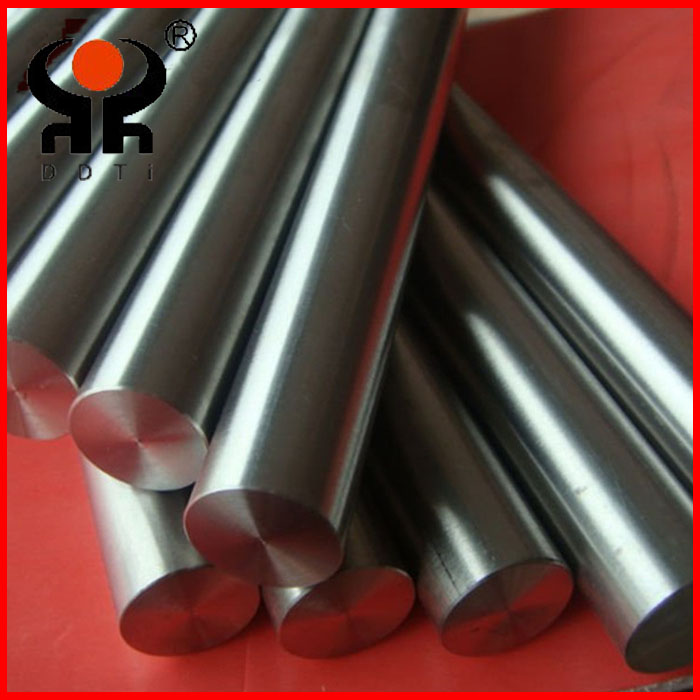
The smelting cost is basically the energy cost necessary to separate titanium from oxygen, and the processing cost is usually the processing and polishing cost. Polishing involves the process of removing cracks or surface damage caused by excessive amounts of oxygen. There are many new technology proposals to reduce melting and processing costs. In order to expand the use of titanium rods in cars, the target price for titanium is 6-10 US dollars/kg TC4 titanium rod has various excellent properties and is the mainstream material for various types of automotive components. Its main advantages and applications are as follows. 1. The low density is only 60% of the steel density, which can not only reduce the overall weight of the vehicle, but also reduce the inertia of high-speed moving parts; 2. Among various metal materials, titanium rods have high specific strength and can be used as load-bearing components; 3. The elastic modulus is only 50% of that of steel, and the fatigue strength is high, making it suitable for making springs; 4. Good heat resistance and can work for a long time at 200-650 ℃, suitable for making high-temperature components; 5. The coefficient of thermal expansion is 50% lower than that of stainless steel and aluminum, making it suitable for making engine valves and other components; 6. Good corrosion resistance, superior to aluminum, magnesium, and stainless steel. It can resist corrosion from the atmosphere, rainwater, anti freezing road moisture, and high-temperature exhaust gas containing hydrogen sulfide. It is suitable for components with harsh working environments such as tailpipes; 7. The frost resistance is excellent, and it will not produce low-temperature brittleness even in an environment of minus 100 ℃; 8. Good formability can be achieved through various force methods such as stamping, hot forging, powder metallurgy, and precision casting to manufacture parts of various shapes; 9. Good decorative properties. Through oxidation treatment, various brightly colored decorative materials can be formed. The application of titanium in automobiles began in the 1950s, shortly after the birth of the titanium industry. Due to technological and pricing reasons, the application of titanium in automobiles has not received much attention from the industry. With the improvement of energy-saving and environmental standards for automobiles, it has gradually become a hot topic of common concern in the international materials and automotive industries in recent years.
|


